Device chart programming patterns
This chapter gives an overview of the identified programming patterns by applying the typical use cases to the device chart.
Programming pattern: Sensor value
Room sensors and room operator units typically measure room temperature, room humidity and room air quality. Room operator units additionally monitor the sensor values. For this sensor value processing, the following conceptual programming pattern in the device chart is recommended.
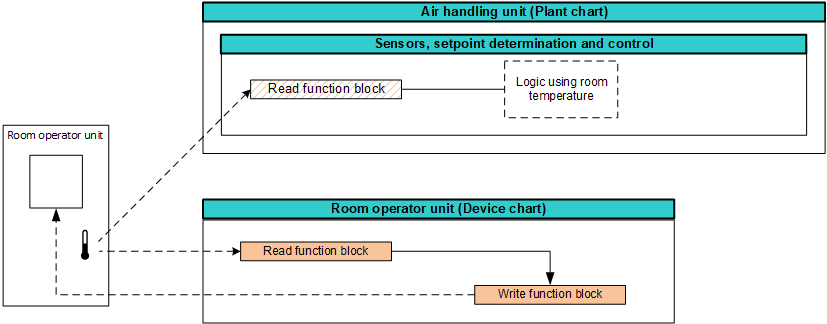
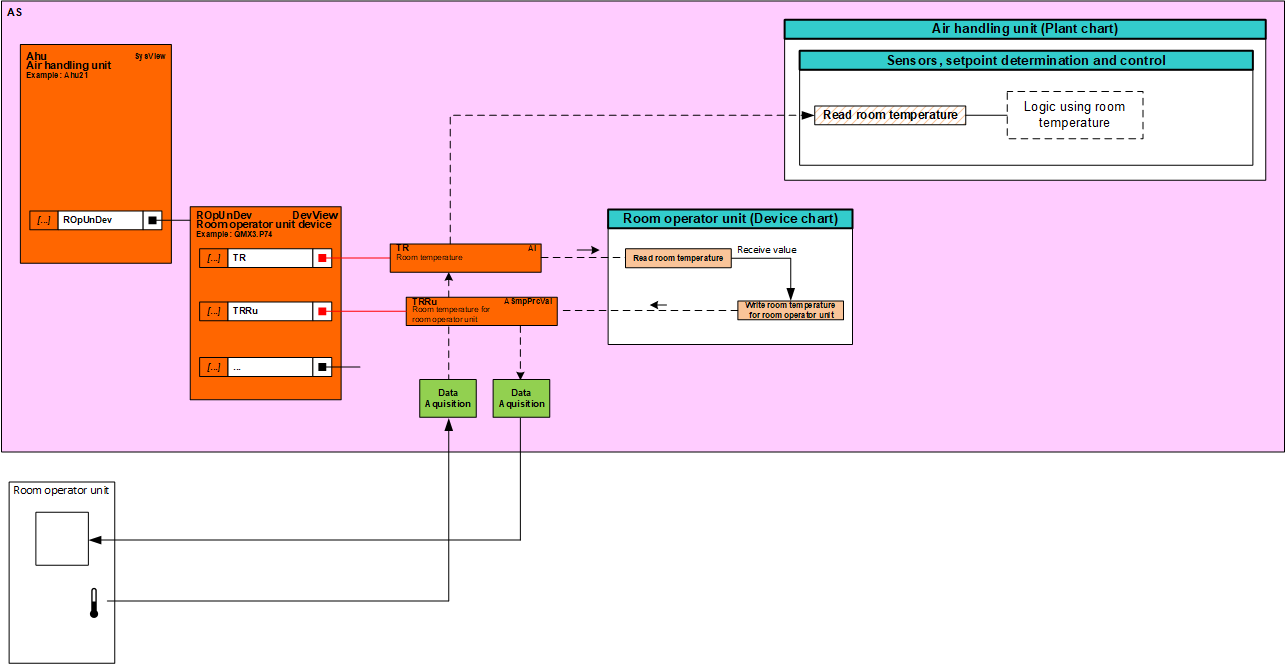
The device chart reads the sensor value from the PL-Link device and writes the value for monitoring purposes to the PL-Link device. The plant chart reads in parallel the same sensor value from the PL-Link device and processes the value according to the plant logic.
The following programming pattern shows this process considering the BACnet objects, the device chart and the plant chart with the associated read, write and command function blocks and the programing logic. The example is based on the room temperature sensor value.
For multiple sensor values aggregation, the following programming pattern is recommended.
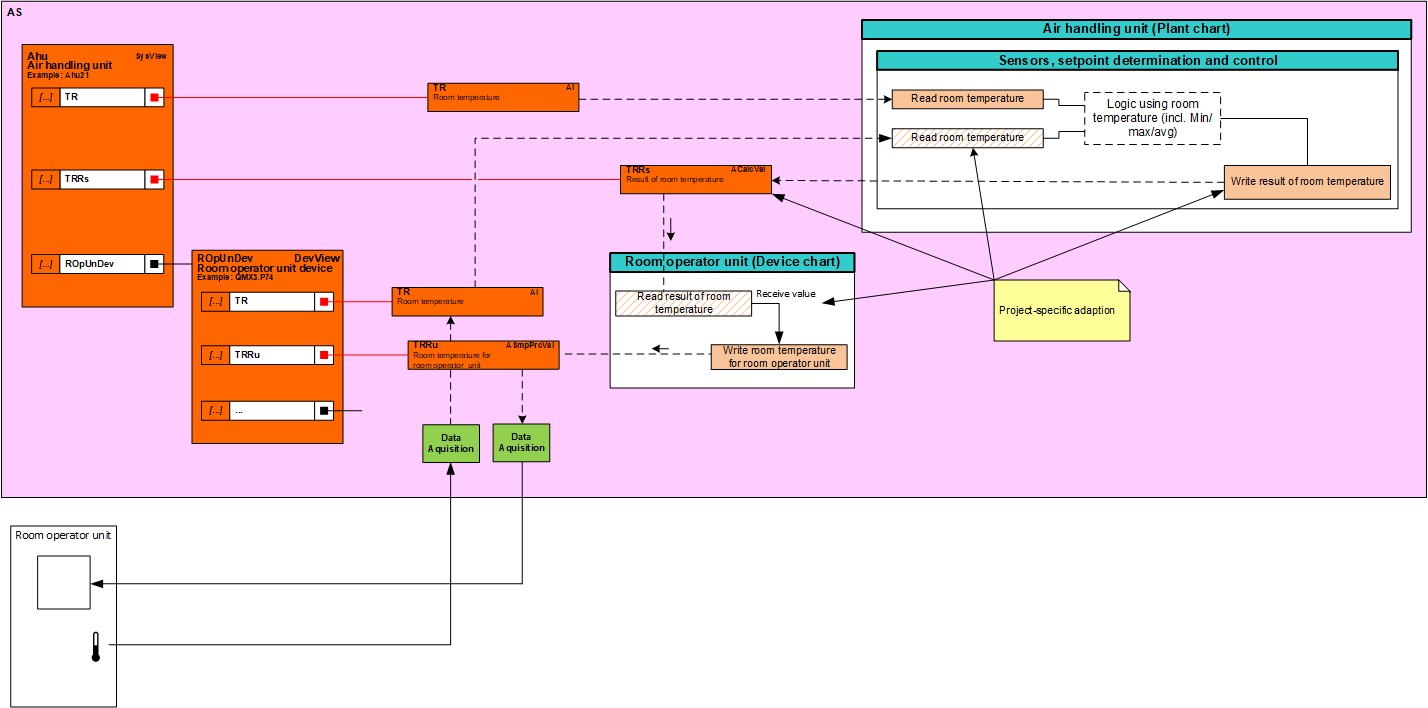
The plant chart processes the different sensor values. The resulting value, owned by a BACnet object of the plant, is assigned to the device chart and written to the PL-Link device.
For the special handling of external sensor values related to the shared object mechanism, see chapter "Shared objects handling".
Programming pattern: Shared object value
Programming pattern: Operation value without feedback
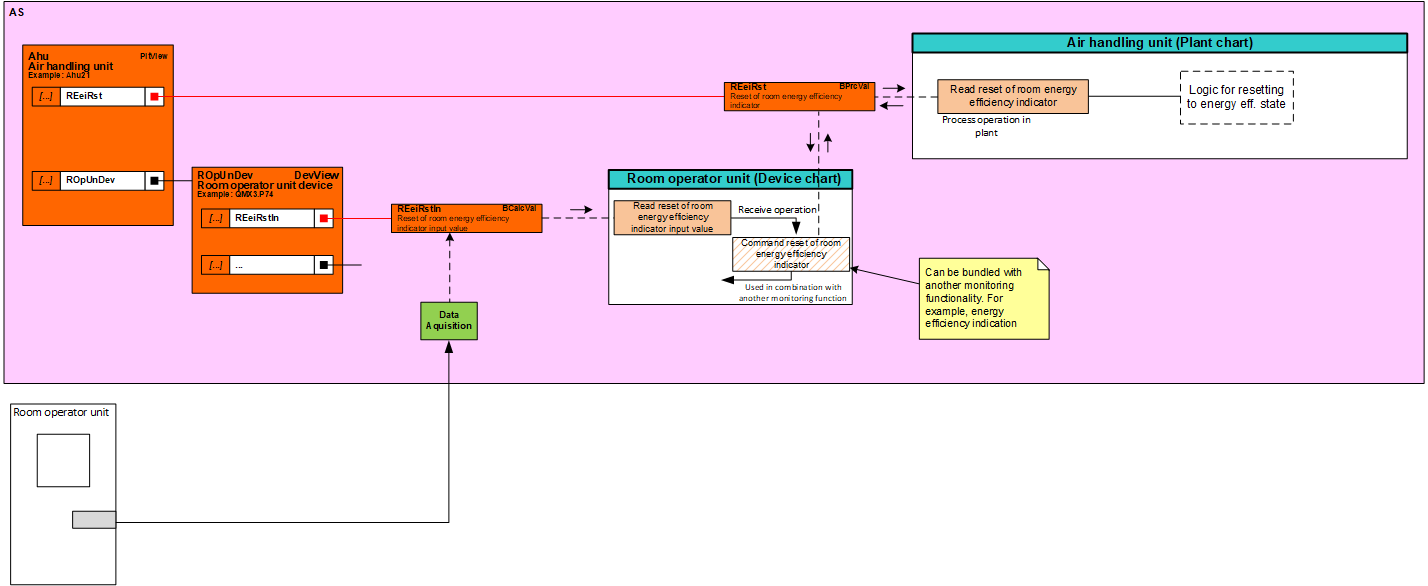
Room operator units can trigger an operation without any feedback dependency. For this operation value processing without feedback dependency, the following programming pattern in the device chart is recommended.

The device chart reads the operation value from the PL-Link device (typically an update indication) and commands the value to the plant chart. The plant chart processes the value according to the plant logic.
The following design picture shows this process considering the BACnet objects, the device chart and the plant chart with the associated read, write and command function blocks and the programing logic. The example is based on the reset of room energy efficiency indication operation value.
Programming pattern: Operation value with feedback
Room operator units can trigger an operation with feedback dependency. For this operation value processing with feedback dependency, the following programming pattern in the device chart is recommended.

The device chart reads the operation value from the PL-Link device and commands the value to the plant chart. The plant chart processes the value according to the plant logic. The device chart commands the resulting operation value for monitoring purposes to the PL-Link device.
The following design picture shows this process considering the BACnet objects, the device chart and the plant chart with the associated read, write and command function blocks and the programing logic. The example is based on the setpoint shift value.
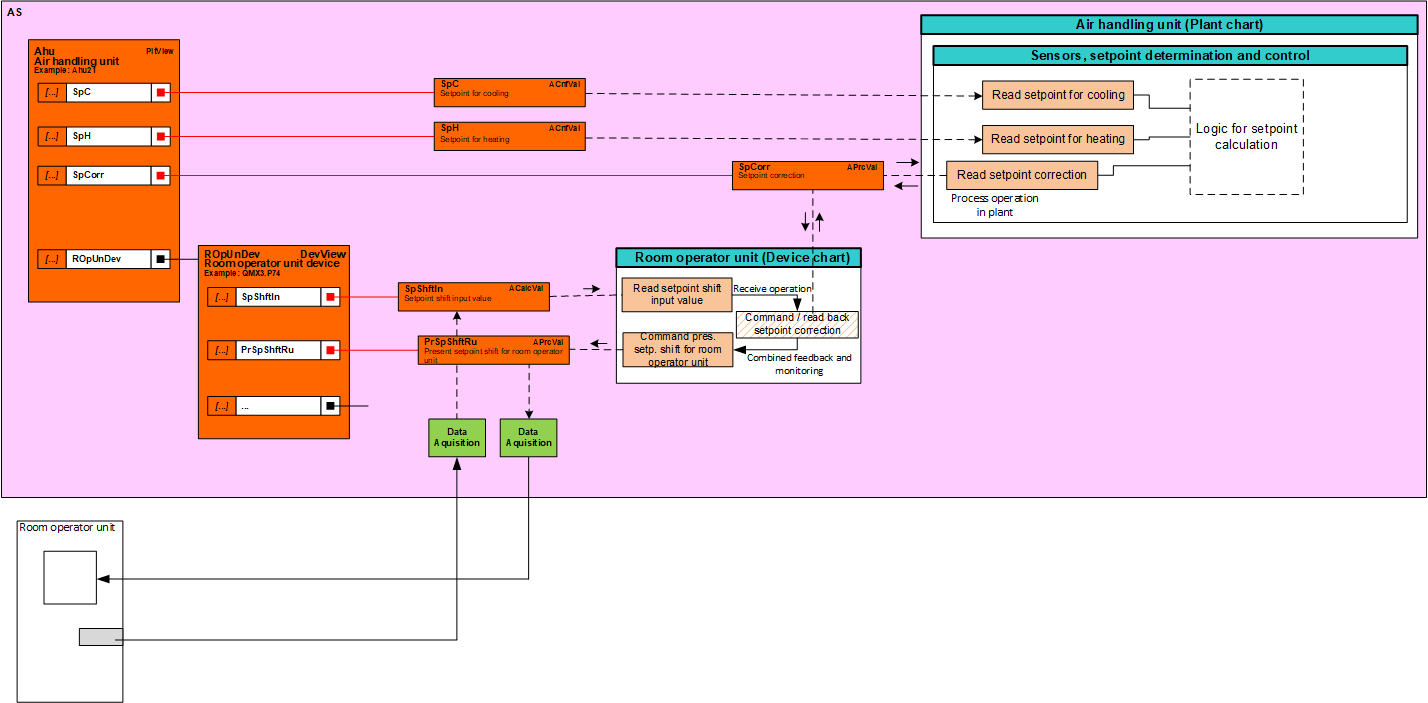
The benefit of this programming pattern is mainly expressed by approaching the multiple operation value trigger.
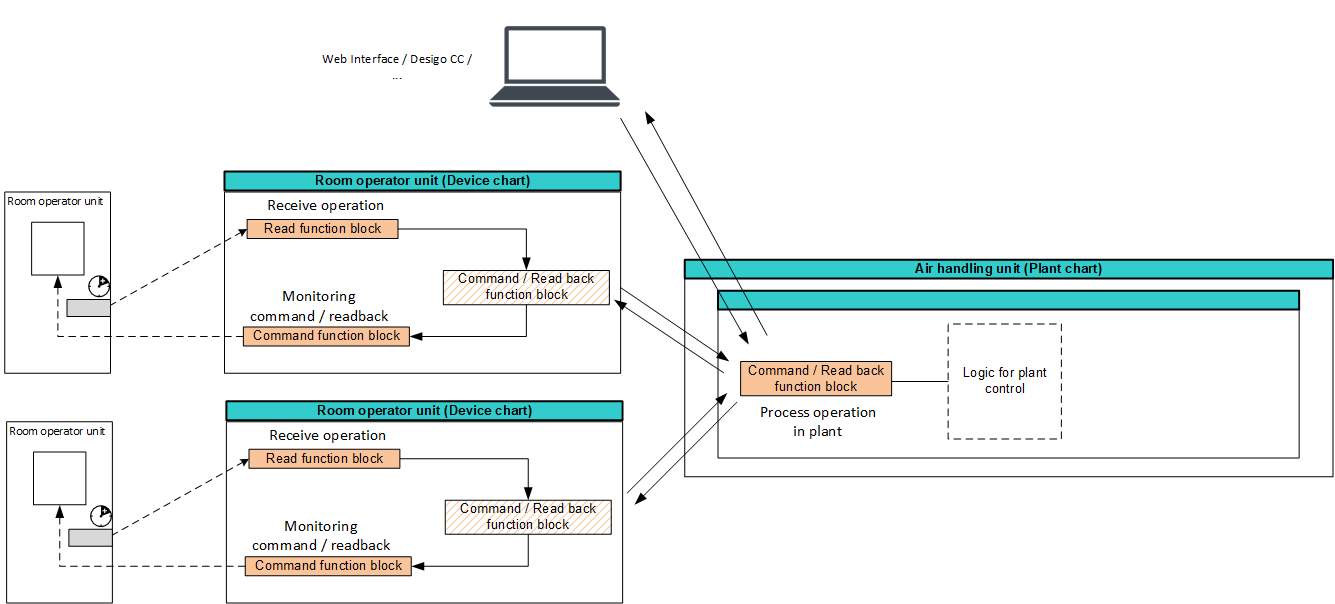
A single BACnet object processes and synchronizes the resulting operation value over all room operator units.
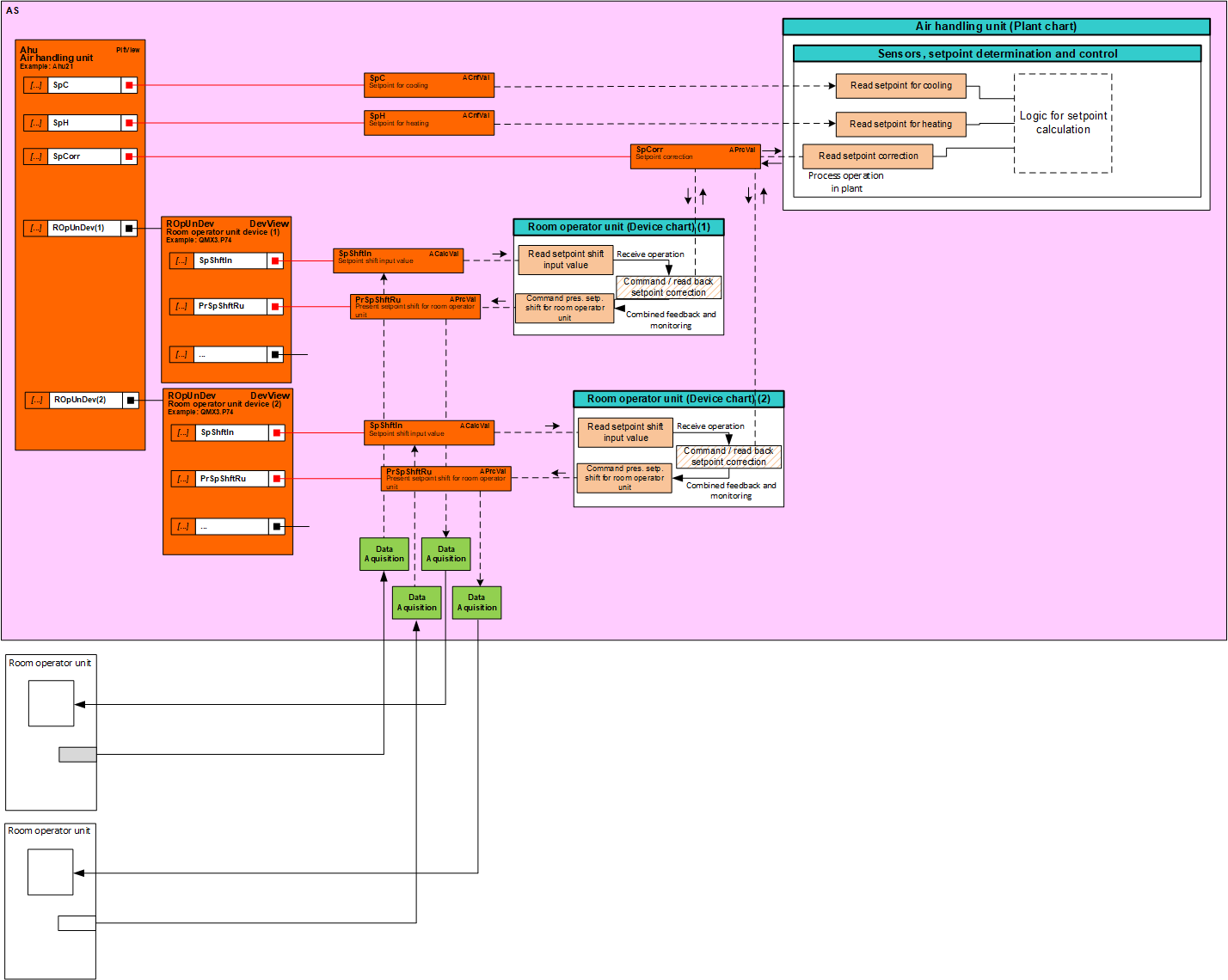
The plant chart processes the different operation values with the plant specific evaluation logic. The resulting value, owned by a BACnet object of the plant, is assigned to the device charts and commanded to the PL-Link devices.
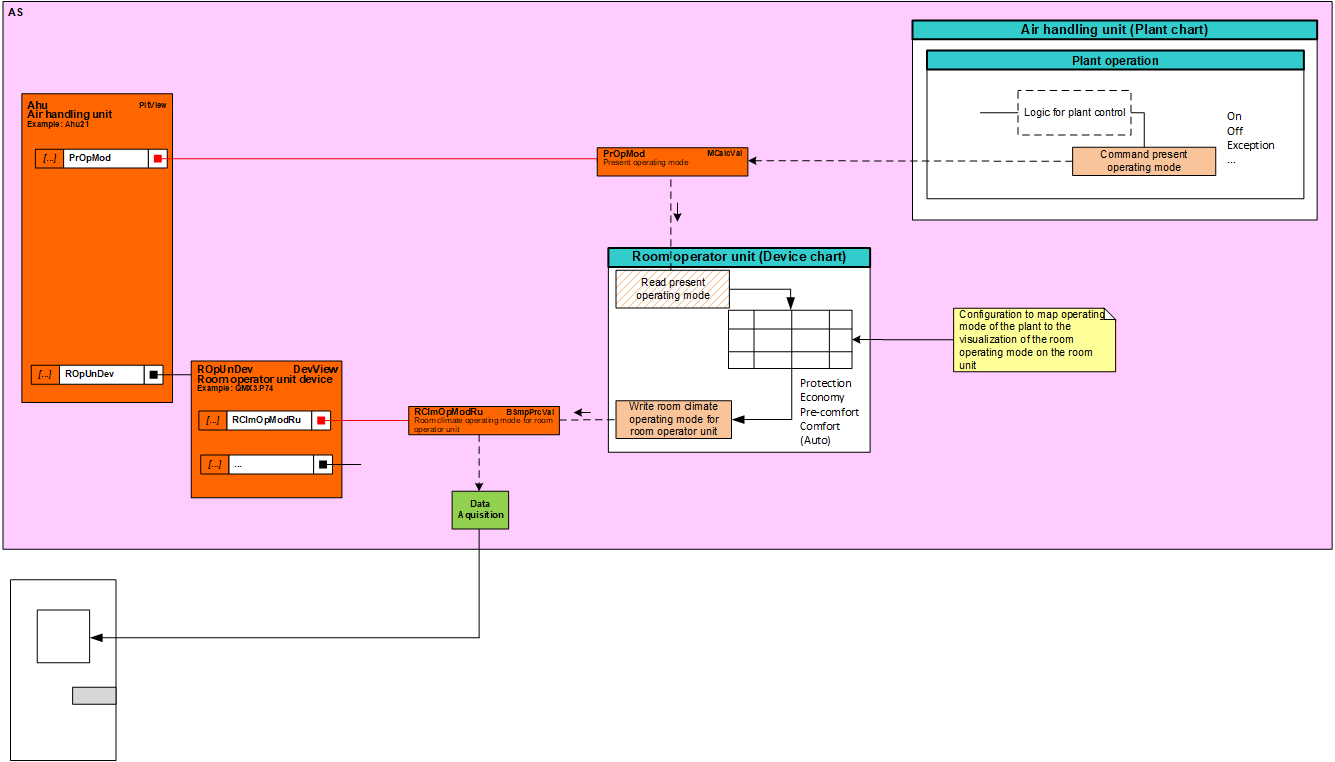
Programming pattern: Calculated value
Room sensors and typically room operator units monitor a calculated value from the plant chart. For this calculated value processing, the following programming pattern is recommended in the device chart.
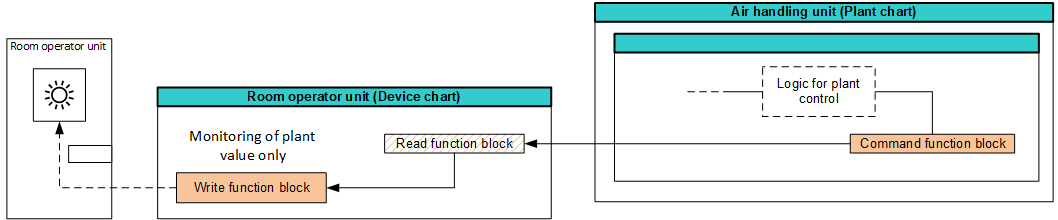
The device chart reads the calculated value from the plant and writes the value for monitoring purposes to the PL-Link device. Often a data point mapping conversion is necessary in the device chart.
The following design picture shows this process considering the BACnet objects, the device chart and the plant chart with the associated read, write and command function blocks and the mapping logic. The example is based on the calculated operating mode value of the plant.
Programming pattern: Shared object value
Instantiated PL-Link shared objects are owned by the PL-Link network object. To benefit from the PL-Link broadcast communication mechanism of the shared objects and not to multiply the communication logic in all the device charts, the following programming pattern in the plant chart (or alternatively in a special broadcast chart) is recommended.
The plant chart reads the sensor value (e.g. local IO) and commands the value for monitoring purposes to the shared object. The value is communicated and monitored via broadcast communication to all affected room operator units within the same zone.
The following design picture shows this process considering the BACnet objects, the device chart and the plant chart with the associated read, write and command function blocks and the programing logic. The example is based on the outside air temperature value.
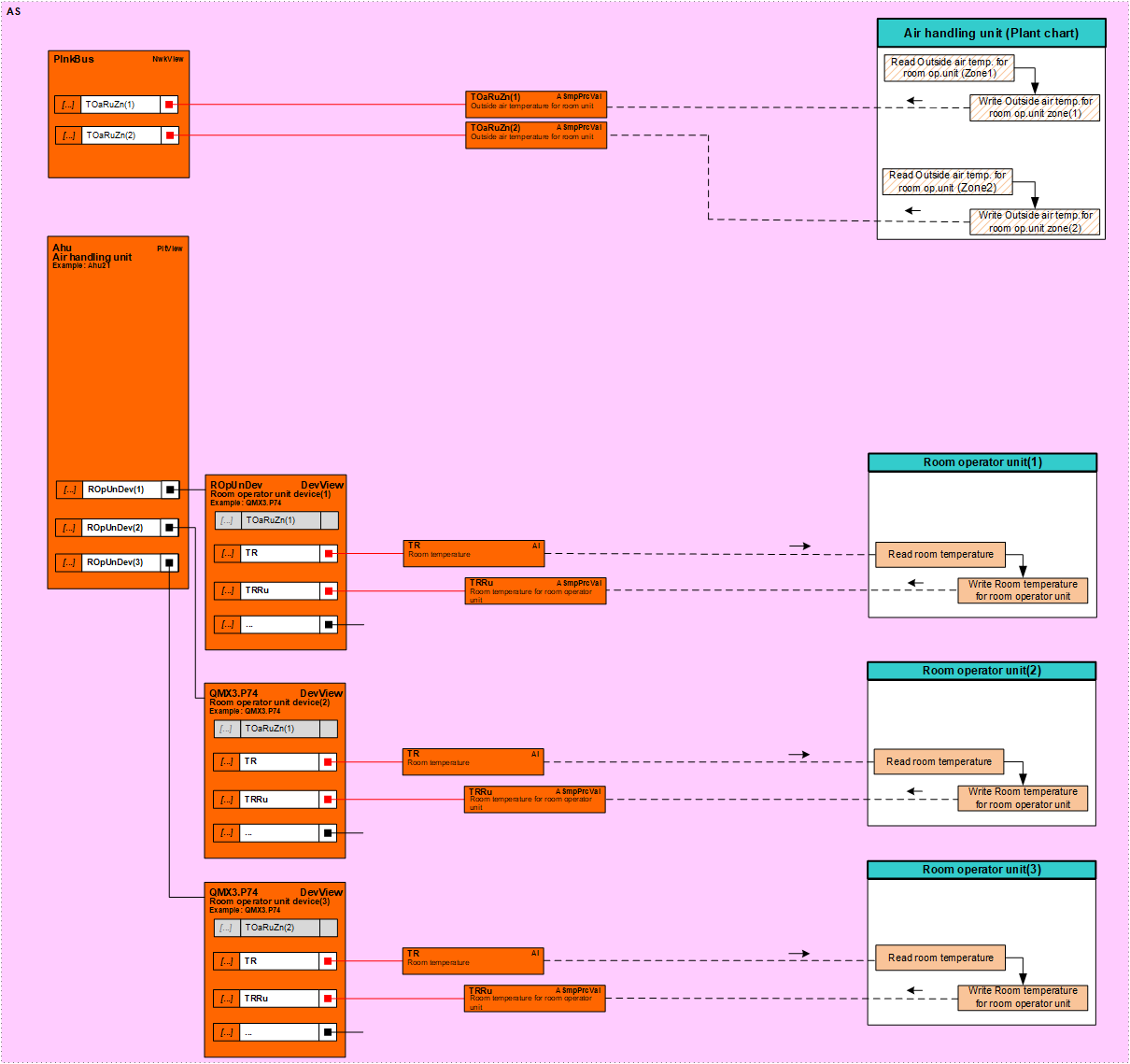

PL-Link shared objects have no library support. After copying the PL-link device from the library, the corresponding shared BACnet object must always be manually re-assigned to the write function block in the plant chart.
For the handling of shared object, see chapter "Shared objects handling".
Handling shared objects